|
This week, as I’ve been reading through my Bible, one phrase kept catching my eye and stirring something in me: “a holy convocation.” It appears repeatedly in the sections about the Israelites’ appointed festivals in Leviticus and Numbers. I wasn’t entirely clear on what it meant at first, so I paused to look it up.
From what I learned, a holy convocation is a sacred assembly—a special gathering of God’s people, set apart (holy) for worship, rest, and intentional remembrance of God. For the Israelites, this meant the entire community coming together before the Lord. It was a day of complete rest, like a Sabbath—no ordinary work was to be done. Instead, they offered worship and sacrifices, celebrating what God had done in their history and reminding themselves that their time, their labor, and their very identity belonged to Him. These holy convocations were tied to specific times: • Passover and the Feast of Unleavened Bread • The Feast of Weeks (also called Pentecost) • The Feast of Trumpets • The Day of Atonement • The Feast of Tabernacles Each of these marked key moments of God’s deliverance, provision, or atonement, and the convocations were central to observing them. Reading this made me think about how this principle carries forward into our time as believers. We’re no longer under the Old Covenant law in the same way, but the heart of gathering together remains. Hebrews 10:25 urges us not to neglect meeting together—as some had begun to do—but to encourage one another, especially as we see the Day approaching. Our Sunday gatherings (and other times we come together) feel like a New Covenant echo of those holy convocations. Today, we assemble in community centered on Jesus and what He accomplished through His death and resurrection. We focus on Scripture teaching, prayer, singing praises, and sharing in communion. It’s a deliberate pause from the rush of life—a time to rest our souls, worship, and remember that our time, work, and identity belong to God through Christ. I’m grateful for these quiet moments of reflection during my reading. It’s a gentle reminder that gathering isn’t just a habit; it’s a holy calling, a sacred assembly where we realign our hearts with Him. I don’t want to take that for granted. I’ve been reading through Numbers again, and today chapters 21 and 25 hit me in a fresh way. I sat down with my Bible open, coffee in hand, and just let the stories sink in.
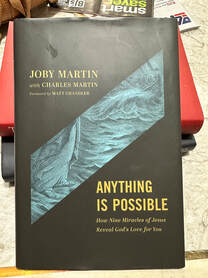
In Numbers 21, the Israelites are at it again—grumbling against God and Moses like it’s their favorite pastime. No real shock there; it’s practically a pattern by now. Their complaining triggers something terrifying: fiery serpents invade the camp. People get bitten, and many start dying. Finally, they come to their senses, admit their sin, and beg Moses to intercede. Moses prays, but God doesn’t just wave His hand and remove the snakes. Instead, He tells Moses something unexpected: “Make a fiery serpent and set it on a pole, and everyone who is bitten, when he sees it, shall live” (Numbers 21:8). A bronze serpent on a pole. Not a cure in the usual sense—no medicine, no ritual cleansing—just look at it in faith, and you live. It was pure mercy. No one earned healing through effort or good behavior; they were saved simply by turning their eyes to what God had provided. That image stuck with me all day. (Numbers 21 always affects me — see my post from yesterday.) Then Jesus picks up this exact story centuries later in John 3:14: “Just as Moses lifted up the serpent in the wilderness, so must the Son of Man be lifted up.” The bronze serpent becomes a shadow, a preview of Jesus Himself lifted on the cross. Look to Him in faith, and live. The connection feels so clear and so profound when you read them side by side. A few chapters later, Numbers 25 tells a different story, but the theme echoes. This time the people plunge into sexual immorality and idolatry—open, defiant sin right in front of God’s presence. A plague breaks out, and thousands die. In the middle of the chaos, Phinehas, Aaron’s grandson, steps up. He sees a man and woman flagrantly sinning, takes a spear, and puts an end to it. The text says plainly, “So the plague on the people of Israel was stopped” (Numbers 25:8). God’s response is striking: Phinehas “turned back my wrath… because he was jealous with my jealousy” (Numbers 25:11). Because he cared so deeply about God’s honor, God turns from judgment, stops the plague, and makes a covenant of peace with Phinehas and his descendants—a promise of an enduring priesthood. Reading these two chapters together left me quiet for a while. God takes sin deadly seriously. Rebellion, idolatry, immorality—they bring destruction every time. The wages of sin really are death, and the stories don’t soften that reality. But what overwhelms me even more is how swiftly God provides a way out. In one case, all it took was looking up at the bronze serpent in faith. In the other, one man stood in the gap with courage and zeal, and the plague halted. Both accounts shout the same thing: God is holy, uncompromisingly holy. Yet He is also relentlessly merciful. He never leaves His people without a way to escape judgment. I keep coming back to that tension—His holiness and His mercy woven together so tightly. It makes me grateful all over again for the cross — for the ultimate “lifting up” that lets me look and live — and the ultimate “intercessor” that stands in the gap for me. Thank you King Jesus for the cross. Thank you Lord for being both just and the justifier. Help me never take Your mercy for granted, and give me the courage to be zealous for Your name when it matters. The story of the bronze serpent in Numbers 21 always hits me hard. Every time I read it, my mind goes straight to Brad—and to Pastor Joby. Here’s why this passage carries such personal weight for me. Years ago, in Jensen Beach, Florida, I was helping with a youth group. One night at an event, a guest speaker shared the account from Numbers 21: the Israelites, grumbling against God and Moses in the wilderness, were struck by venomous snakes as judgment. Many died. When they repented and cried out, God instructed Moses to make a bronze serpent and mount it on a pole. Anyone bitten who looked at it in faith would live. That message pierced Brad’s heart. I watched him respond with pure joy—he gave his life to Christ right there, jumping up and down, tears streaming, shouting, “I believe!” It was one of the most beautiful moments I’ve ever witnessed. We talked for a long time afterward about Jesus, sin, the cross, and what it means to follow Jesus. After Brad passed away in 2020, I wrote about that night and how profoundly it affected me. Later, I connected with Pastor Joby, who leads the church I now attend in Jacksonville. In a conversation, I learned something astonishing: he was the guest speaker that evening—the one who preached on the bronze serpent and led Brad to faith. Moments like that stop me in my tracks. God connects people, places, and truths in ways we rarely see in real time. The bronze serpent story now holds deeper meaning for me: it’s tied to Brad’s declaration of belief, to Pastor Joby’s faithful sharing of the gospel, and to the quiet reminder that God is always at work, weaving threads we only glimpse later. Here’s what I wrote after Brad’s death in 2020: I’m sharing this because it weighs heavy on my heart. This week, my friend Brad Singleton—known to many as Brad Lee Saint—took his own life. I don’t have explanations for why. What I do know is that he was deeply loved and will be deeply missed. Brad was a remarkable young man who faced hardships most of us can’t imagine. Yet the Brad I knew stayed positive, had an enormous heart, and always tried to lift others up. That’s what makes this so painful and confusing. One truth stands firm: Brad loved Jesus. I know it because I was there the night he accepted Christ as his Lord and Savior. Last night, God replayed that entire evening in my mind like a vivid memory. We were at a youth event—possibly at the Methodist church on Kanner Highway in Stuart or maybe Grace Place. The speaker described the Israelites dying from snakebites, terrified and desperate. Moses prayed, and God told him to fashion a bronze serpent on a pole: look at it and live. The speaker painted the scene so clearly—some might have doubted it could really heal; others would have pleaded with loved ones, “Please, just look!” If it were his family, he’d have begged, carried, even held them up to see it. But ultimately, each person had to choose to look. He drew the parallel: we’re all “snake-bitten” by sin, the poison coursing through us. The only cure is to look to the cross in faith—believing Jesus bore our sins and rose again. Others can urge us, but the decision is personal. Then he asked, “Will you believe?” Brad stood up, tears flowing, jumping with joy: “I believe!” I saw the change happen before my eyes. We both cried, then talked long into the night about Jesus and following Him. Now I sit with hard questions: How do I hold faith and suicide in the same hands? How do we spot when someone reaches that breaking point? How do we bear the grief left behind? I don’t have answers. I wish I did. What I do know is that overwhelming pain often hides in places no one sees. I’ve walked through depression myself—it’s like being trapped in a dark pit, wanting help but fearing you’ll shatter if you speak. The darkness can feel inescapable. The latest numbers from the World Health Organization are heartbreaking: more than 720,000 people die by suicide each year—one every 40 seconds or so—and many more attempt it. Suicide ranks as the third leading cause of death for those aged 15–29 globally. These statistics are staggering, and they remind me we’re not alone in the struggle. The only place I know to bring all of this is to the feet of Jesus. I pray for comfort and peace for Brad’s family and everyone who loved him. I’m grateful for that night when I saw him proclaim, “I believe,” with such joy. And I cling to the hope that Brad is now in the presence of the Savior he trusted—the One lifted up for us, just like that bronze serpent, so that whoever believes may have eternal life. This week I couldn’t decide on my Knowing God statement — I have two.
Knowing that God chose to dwell right in the middle of the Israelite camp reminds me that even when I feel small, fearful, anxious, or completely overwhelmed—like a grasshopper staring up at a giant—the same faithful God who stayed present and unshaken in their midst is right here with me, steady and unchanging. Knowing that God understands how quickly I can forget, how easily I drift, and how often my focus slips away shows me I can truly depend on Him to provide something real and tangible — like the tassel with its blue thread on the Israelites’ garments or Aaron’s staff that budded, flowered, and bore almonds — constant, visible reminders of His faithfulness, His grace, and His unwavering love for me—even on days when my heart wanders. Lord, today I’ve been meditating on Numbers 17—the story of Aaron’s staff. What a powerful chapter. After all the grumbling and rebellion among the people, You gave such a clear, undeniable sign of Your chosen leadership. Twelve staffs placed before You in the tent, one for each tribal leader, with Aaron’s representing Levi. Only the one You selected would sprout. And the next morning… Aaron’s dead, lifeless rod had not only comes alive—it had budded, blossomed, and produced ripe almonds. Overnight. From nothing to full fruitfulness.
I know the main point here is Your unmistakable endorsement of Aaron’s priesthood and authority. It silenced the complaints, confirmed Your choice, and reminded everyone that Your appointments are sovereign and fruitful. No ambiguity. No debate. Just life bursting forth where there was once only dryness. But as I sat with this passage, my mind kept drifting to something deeper, more personal. That one night with You transformed everything for that staff. Dead wood → budding → blooming → producing fruit. It’s such a vivid picture of what You do in a life. You take what seems utterly “dead”—hopeless, barren, lifeless—and bring it to vibrant, abundant life. It makes me think about salvation itself. How You take a spiritually dead person, someone far from You, hardened by sin or indifference, and in Your grace, You breathe resurrection life into them. Death to life. Just like that staff, overnight in Your presence, something miraculous happens. No human effort could make a dry stick bloom and bear almonds—only Your power. And no human merit saves us—only Your miraculous intervention. This budding staff stands as a tangible sign of Your power and authority, yes—but also of Your ability to revive what’s dead. It’s encouragement for anyone who feels like their life is just a lifeless rod right now. You can change everything. You specialize in turning deserts into gardens, dry bones into armies, dead wood into fruit-bearing branches. And then there’s the part where You told Moses to keep Aaron’s staff in front of the ark—as a permanent reminder, a visual testimony against the rebellious, but also a lasting sign of Your faithfulness. It wasn’t discarded; it was preserved. That speaks to me too. How important it is to keep reminders in our lives of Your past faithfulness and confirmations. Those moments when You showed up unmistakably, when You proved Your choice, Your power, Your grace. We need those “kept staffs” in our own stories—memories, journals, testimonies, even physical mementos sometimes—to look back on and say, “See? God did this. He is faithful. He brings life where there was none.” Thank You, Father, for this picture in Your Word. It’s both a declaration of Your sovereign choice in leadership and a quiet promise to every weary heart: what looks dead to us is never beyond Your reviving touch. One night in Your presence can change everything. Help me remember that today. And keep blooming in me, Lord—bud, blossom, fruit. All for Your glory. Amen. Father God,
As I was reading in Numbers 15 today, something about the blue thread in the tassels struck me. You didn’t just leave Your people with commands or truths — You gave them a way to remember. You told them to stitch a blue thread into the tassels of their garments — something visible, something they would see over and over throughout the day. Every time they walked, every time they sat down to work, every time the wind moved their robe, that small flash of blue would catch their eye. A reminder woven into the fabric of ordinary life: “Remember all the commands of the Lord and do them.” A thread of heaven woven into the fabric — a visible, tactile cue in the middle of daily routines. I learned that the blue dye came from little Mediterranean sea snails — called murex. It required thousands of the sea snails to get just a small amount of rich deep blue dye. It was associated with royalty, authority, and was used in sacred spaces, including the Tabernacle curtains (see Exodus 26). The dye was rare and costly. Something that made the people appreciate that blue thread even more. I think about how easy it is for me to forget. I don’t wake up intending to drift, but I do. My focus shifts. My heart wanders. And yet You know that about me. You knew Your people would need reminders. So You gave them something tangible — a flash of blue at the edge of their vision — calling them back to covenant faithfulness. Lord, I may not wear a blue tassel on my garment, but I need that same reminder stitched into my heart. Let Your Word be my blue thread. Let Your Spirit gently catch my attention when I start to turn inward or chase what is fleeting. I want to live awake to the fact that I belong to You. Not just in theory, not just on Sunday mornings, but in the small, ordinary moments when no one is watching. Help me live aware that I belong to You. Help me remember. Help me obey. Thank You for knowing how forgetful I am—and for loving me enough to give reminders anyway. Amen. Dear Journal,
Tonight I read Numbers 11—the chapter where the people complain—and it hit me like a freight train. I wasn’t prepared for how personally it would speak. The Israelites had only been traveling from Sinai for three days. Three days since leaving the mountain where God’s presence rested among them. Just a little over 2 years removed from the miracles of the Exodus—plagues, Red Sea parting, manna every morning, the pillar of cloud and fire guiding them step by step. God had rescued them from brutal slavery, fed them in the wilderness, protected them, and was literally leading them toward the Promised Land. And yet… they complained. Their grumbling was so intense that “the fire of the Lord burned among them and consumed some of the outlying parts of the camp” (v. 1). It didn’t stop there. By verse 10, Moses hears the people weeping at their tent doors, “and the anger of the Lord blazed hotly.” They had already forgotten the whips, the bricks, the oppression. All they could remember were the leeks, the onions, the fish they “ate freely” in Egypt. Selective memory fueled by discontentment. A heart that refused to trust God’s goodness and His plan. Then God, in response to Moses’ raw, honest intercession, sends quail—enough to cover the camp. But even that provision came wrapped in judgment: “While the meat was still between their teeth… the Lord struck down the people with a very great plague” (v. 33). Grace and consequence, side by side. Reading it today, I just sat there with tears running down my face. Because that was me last night. That was my heart. Not marveling at the countless ways God has carried me, provided for me, answered prayers I didn’t even know how to pray, opened doors I could never have forced open. Instead, I was fixated on what I didn’t have, what felt delayed, what wasn’t going the way I wanted. Discontentment had crept in so quietly I barely noticed until the Word held up a mirror. I was doing exactly what they did—allowing a complaining spirit to take root, letting ingratitude crowd out trust. And the thought that my attitude could grieve the same God who has been so relentlessly kind to me… it broke me. I had to stop right there, confess it all, ask forgiveness, and plead for a clean heart. I don’t want to be the person who forgets yesterday’s deliverance because today feels hard. I don’t want to kindle anger in the One who has never stopped being good. Lord, help me remember. Help me see Your hand in the manna and in the wilderness both. Guard my heart from discontentment. Let gratitude be my default, trust my reflex, and praise the natural overflow. I’m so thankful Your Word still speaks this sharply. Even when it hurts, it heals. With a humbled and grateful heart, Brenda I got stuck on Numbers 8:1–3 “Speak to Aaron and say to him, ‘When you set up the lamps, the seven lamps shall give light in front of the lampstand.’” First, I found myself wondering — how do you direct light from a lamp? For some reason I had always pictured little candles sitting on the branches. I never stopped to think about the fact that these lamps held oil. They had wicks. And a wick can be positioned. It can be adjusted so the flame leans and casts its light in a particular direction.
That detail alone made the passage come alive for me. Then I wondered — why would the direction matter? Why would God specify where the light should fall? I was so excited when I realized the light would shine toward the Table holding the twelve loaves of bread — the Bread of the Presence. Of course that would capture my attention. Bread glowing in sacred light? Yes, please. Bread is my favorite food! But the more I read, the more I understood that it wasn’t just about highlighting the bread. The lamps were positioned to shine outward into the Holy Place — not backward toward the wall. In a windowless tent, that golden lampstand was the only source of light. Its flames were meant to illuminate the space where the priests served. Nothing about it was accidental. God cared about where the light fell — even the angle of a wick mattered in the presence of a holy God. And that makes me pause. |
AuthorBrenda McCullers Podcast LinksArchives
March 2026
Categories
All
|


RSS Feed